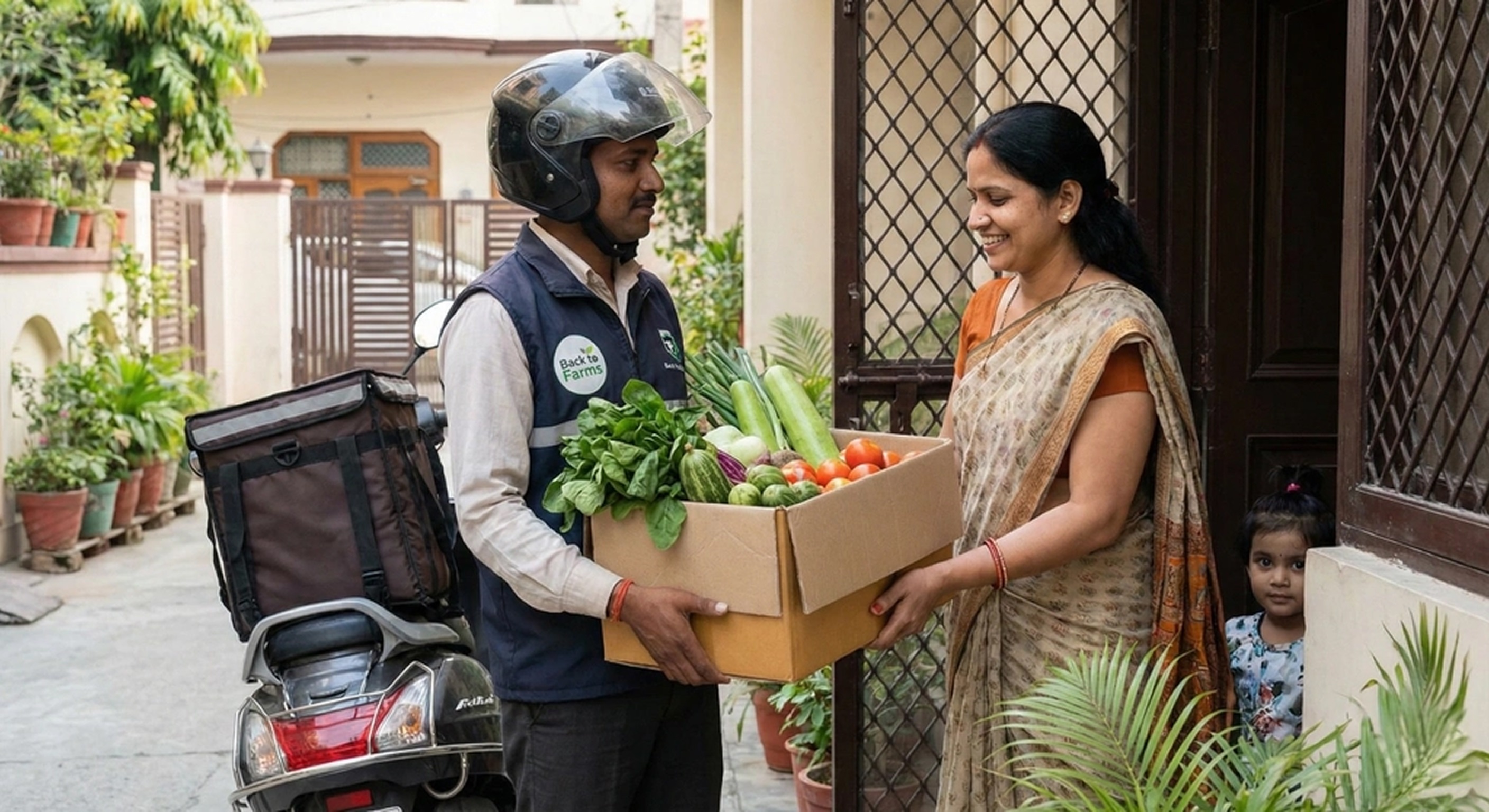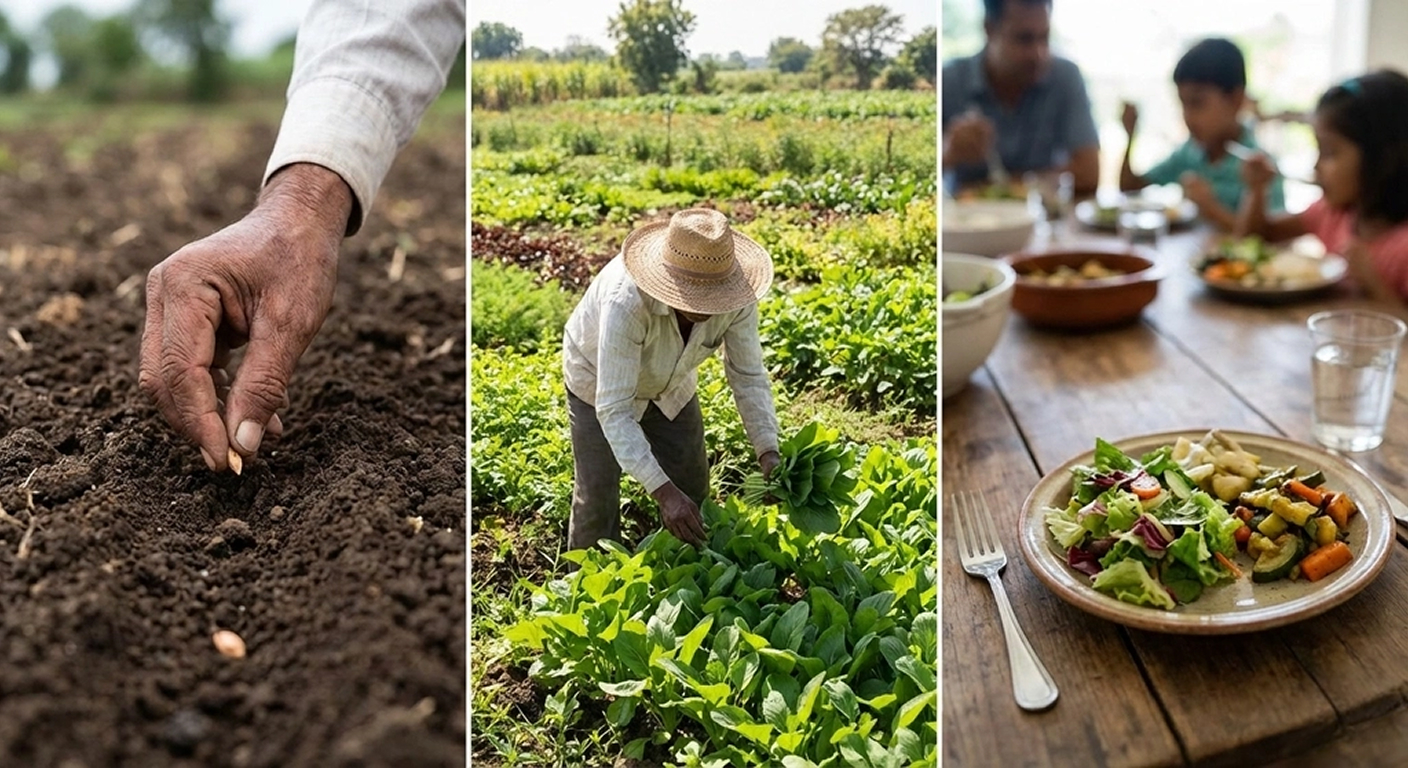
At Back to Farms, we believe that everyone deserves food that’s honest, healthy, and grown with care. But what does it really mean when your food is labelled "organic"? This blog takes you on a journey - from the moment a seed is planted in the soil to the time it reaches your plate - unpacking the sustainable story of organic farming.
Introduction to Organic Farming
Definition and Principles
Organic farming is a holistic approach to agriculture that promotes ecological balance, biodiversity, and soil health - without the use of synthetic fertilizers, pesticides, or genetically modified organisms (GMOs). Certified organic produce is grown using natural methods that prioritize long-term sustainability over short-term yields.
The core principles of organic farming include:
- Soil health preservation
- Natural pest management
- Crop rotation and diversification
- Animal welfare and ecosystem balance
These practices support both human health and the environment, aligning with the conscious lifestyle choices of our invite-only Back to Farms community.
History and Evolution
While the concept of organic farming may seem modern, its roots go back centuries. Ancient agricultural systems relied heavily on compost, manure, and crop diversity - techniques still used in modern organic practices.
In the early 20th century, pioneers like Sir Albert Howard and J.I. Rodale began advocating for a return to nature-based farming methods. Today, growing consumer awareness and environmental concerns have brought organic agriculture to the forefront.
Cultivation Practices
Soil Preparation
Healthy soil is the foundation of organic farming. Before sowing even a single seed, organic farmers focus on:
- Soil testing for pH and nutrient levels
- Composting to enrich soil with natural organic matter
- Cover cropping to prevent erosion and add nutrients
- Tilling minimally to preserve microbial life and carbon storage
At Back to Farms, all our partner farms maintain soil fertility through natural amendments -ensuring your produce begins with nutrient-rich earth.
Organic Fertilizers and Pest Control
Instead of synthetic fertilizers, organic farms use:
- Compost
- Green manure
- Animal dung
- Rock phosphate and seaweed extracts
For pest management, organic farms rely on:
- Neem oil and garlic sprays
- Companion planting
- Insect-repelling herbs
- Manual removal of pests
- Encouraging natural predators (like ladybugs)
This ensures a chemical-free growing process - something you can verify with our Live CCTV Farm Access.
Harvesting and Post-Harvest Handling
Techniques and Tools
Harvesting in organic farming is done with care to preserve the integrity and quality of produce. Since chemicals can’t be used to extend shelf life, freshness becomes critical.
Our farm partners use:
- Sharp, sterilized tools to avoid bruising produce
- Timely harvesting based on natural ripening cycles
- Immediate sorting and cooling to maintain freshness
Maintaining Quality and Freshness
Once harvested, organic produce is:
- Washed using clean, chemical-free water
- Packaged in eco-friendly materials
- Stored at optimal temperatures
- Delivered swiftly through local farm-to-door systems
Thanks to Back to Farms’ Farm Connect Matching System, you get produce within hours of harvest - straight from your matched farm to your doorstep.
Distribution & Consumption
Farm‑to‑Table Movement
Back to Farms maintains a short, traceable supply chain, so members know exactly who, where, and when their food is grown and harvested, reducing carbon footprints and supporting local producers.
Consumer Benefits
| Benefit | Impact |
| Lower pesticide exposure | Improved health and safety |
| Increased antioxidants | Better nutrition and freshness |
| Richer flavour & texture | Enhanced eating experience |
| Transparent sourcing | Trust and food traceability |
| Support for local farmers | Community empowerment |
Challenges & Future of Organic Farming
Market Demand & Constraints
- Though demand is rising, organic farming covers only a small portion of total land.
- Farmers face higher labour costs and hurdles in certification.
- “Natural” labels vs certified organic can lead to confusion.
Technological Innovations
| Innovation | Application in Organic Farming |
| IoT & sensors | Soil moisture & nutrient monitoring |
| Drones & satellite imagery | Crop health assessment, yield forecasts |
| Data-driven agri tools | Optimising workflows, tracking climate conditions |
| Mobile traceability apps | Real-time transparency for consumers |
Verified Stats & Industry Insights
Global Organic Market & Area Growth
- Global organic farmland rose by 2.5 million ha in 2023, reaching 98.9 million ha (~2.1% of total farmland)
- Global organic food sales reached €136 billion in 2023 (~USD 145 billion)
- Projected global organic food market: USD 286.4 billion in 2025, growing to USD 1.05 trillion by 2034 (CAGR 15.5%)
Organic Farming in India
| Metric | Value |
| Number of organic producers | ~2.3 million (≈30% of global producers) |
| Organic land area in India | ~2.78 million ha (~2% of net sown area) |
- India leads the world in the number of organic producers (~2.36 million in 2023), though per‑capita farm size is small
- Organic land area in India contributes to ~1.5% of global organic farmland
Health & Price Insights
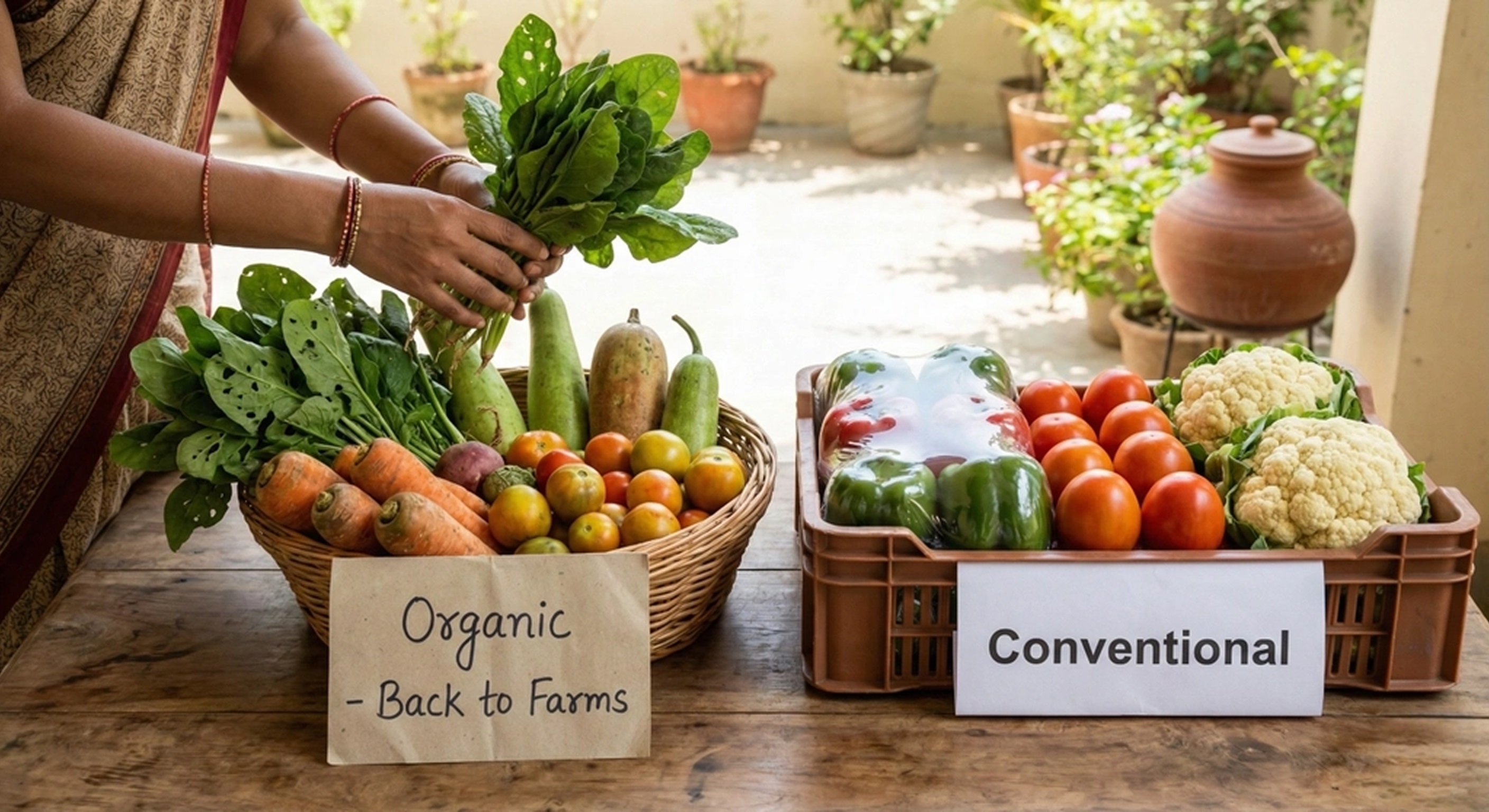
- Organic produce costs on average 52.6% more than conventional yet delivers reduced chemical exposure and higher antioxidant content.
Conclusion
Organic farming is more than a type of agriculture - it’s a holistic journey grounded in transparency, sustainability, and health. At Back to Farms, we bring this journey straight to you: from carefully cultivated soil, through ethical harvests, to nutrient-rich produce on your plate.
When you choose Back to Farms, you're choosing food that is trusted, traceable, and transformative - for both your health and your community.